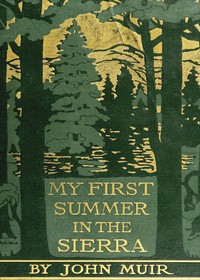
My First Summer in the Sierra — Inside the Classic
Edition facts
The source record for My First Summer in the Sierra — Inside the Classic measures this digital text at 63,144 words, 4 hr 35 min estimated reading time, and 7 detected text sections.
The text analysis averages about 24.3 words per sentence, while the detected sections provide another way to judge how the source is divided.
Project Gutenberg metadata also associates the work with “Naturalists -- United States -- Biography,” connecting these edition facts with the source record’s subject description.
Calculated from edition completeness, EPUB availability, text structure and catalogue metadata. Not a user rating.
How this score is calculated
- Description quality20 pts
- Title & short description10 pts
- Source metadata20 pts
- Text length15 pts
- Chapters / structure15 pts
- EPUB file integrity20 pts
Total of 100 points, scaled to a 2.5-5.0 range. Editions with an empty description or a missing EPUB file are not scored.
Public-domain source text
Read the source text
The source text is kept in the dedicated reader, separate from this catalogue record and its commentary.
John Muir's My First Summer in the Sierra opens not with a grand declaration but with a mundane task: driving a flock of sheep through the foothills. This practical beginning grounds the reader in the daily rhythms of the expedition, yet Muir's attention quickly turns to the surrounding landscape. His prose oscillates between precise botanical description—noting the Abies magnifica with its storm-broken top—and moments of exuberant address, such as his farewell to a grasshopper, a bear, and a fly. The diary format allows for abrupt shifts in pace, from leisurely observations of deer to the sudden drama of a snowstorm. These changes in tempo mirror Muir's own alternating moods of calm contemplation and joyful excitement.
The Voice of a Naturalist-Poet
Muir's language in My First Summer in the Sierra is distinctive for its fusion of scientific precision and poetic exuberance. He describes a deer as exhibiting "the very poetry of manners and motion," and a grasshopper as a "crisp, electric spark of joy." This blend of the empirical and the lyrical is consistent throughout the excerpts. Muir often personifies natural elements, addressing them directly: "Good-night, friends three,—brown bear, rugged boulder of energy…" Such apostrophes reveal a deep emotional engagement with the landscape. Yet he also includes meticulous details, such as noting that a silver fir's annual rings "tell the year of the storm" that broke its top. This dual register—scientific observation and personal reverence—gives the narrative a unique texture, where factual data and spiritual wonder coexist without contradiction.
Shifts in Pace: From Stillness to Motion
The diary structure of the book creates natural variations in pace. Some entries are meditative, lingering on a single subject—like the grasshopper's "sermon" on the dome—while others move rapidly through a series of events. For instance, the July 22 entry begins with a deer sighting, then shifts to a reflection on wild animals' cleanliness, and finally to a detailed sketch of a silver fir. This quick succession of topics mirrors the restless attention of a naturalist in the field. Muir also uses sentence length to control rhythm: short, punchy observations ("Sundown, and I must to camp") contrast with longer, flowing passages that mimic the sweep of a landscape. The reader is carried along by these changes, experiencing the same alternation of focused study and broad wonder that Muir himself felt.
Recurring Details: The Shepherd's Dual Role
Throughout the excerpts, Muir occupies a dual role as both shepherd and naturalist. He is responsible for the flock, yet his attention constantly drifts to the surrounding wilderness. This tension is evident in his language: he notes the sheep only in passing, while devoting pages to a single grasshopper or deer. The sheep serve as a practical anchor, but Muir's true focus is the non-human world. This dynamic shapes the narrative's pace—the demands of herding impose a routine, but Muir's curiosity repeatedly breaks free. The reader sees this in his willingness to linger on a "comical little hopper" while the flock presumably grazes nearby. The shepherd's task becomes a frame for a deeper exploration, and the tension between duty and wonder gives the book its distinctive forward momentum.
Readers approaching My First Summer in the Sierra should attend to Muir's shifts in register—from the technical to the rhapsodic—as these reveal his evolving relationship with the landscape. The diary format invites slow reading, allowing one to pause on a single observation or to follow the narrative's quick transitions. Muir's voice is both intimate and expansive, and the book rewards those who listen for the changes in its pace.
Muir’s journal keeps the scent of sun-warmed pine and sheep dust, a stillness I’ve returned to for decades. That patient watching reminds me of another old friend, The Tropical World Aspects of man and nature in the equatorial regions of the globe. — Key Ideas to Explore, which taught me that the equator hums with its own solemn green rhythm. Both whisper of worlds that simply are.
There are no reviews for this eBook.
How did this book work for you?
Your answers remain private and are stored only in this browser.