
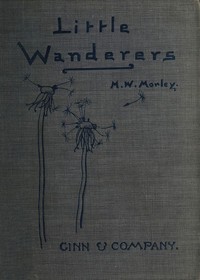
Little Wanderers — Background and Themes
Edition facts
For Little Wanderers — Background and Themes, the stored edition analysis reports 20,022 words, 1 hr 28 min estimated reading time, and 38 detected text sections.
The text analysis averages about 20.3 words per sentence, while the detected sections provide another way to judge how the source is divided.
Project Gutenberg metadata also associates the work with “Natural history -- Juvenile literature,” connecting these edition facts with the source record’s subject description.
Calculated from edition completeness, EPUB availability, text structure and catalogue metadata. Not a user rating.
How this score is calculated
- Description quality20 pts
- Title & short description10 pts
- Source metadata20 pts
- Text length15 pts
- Chapters / structure15 pts
- EPUB file integrity20 pts
Total of 100 points, scaled to a 2.5-5.0 range. Editions with an empty description or a missing EPUB file are not scored.
Public-domain source text
Read the source text
The source text is kept in the dedicated reader, separate from this catalogue record and its commentary.
Margaret Warner Morley opens Little Wanderers with a striking inversion: plants, she writes, are 'great travelers,' yet it is the seeds—the children—that wander while the rooted parents stay put. This playful framing sets the tone for a natural history that treats seed dispersal as a kind of adventure story. The book, published in 1899, draws on familiar plants like dandelions, milkweeds, and maples, but also introduces less common examples such as the Russian thistle and cow parsnip. Morley’s voice is direct and conversational, often addressing the reader as 'you' and encouraging hands-on observation: 'you can find a great many of them without being told; and that, after all, is the best way.'
Why Plants Travel: A Topsy-Turvy World
Morley begins by explaining that plants are not native to all the places they now grow. The oxeye daisy, buttercup, and Canada thistle, she notes, came from Europe with early settlers and 'took possession of the New World with them.' This historical observation is paired with a practical farmer’s perspective: daisies may be lovely in meadows, but 'daisies in the hay are another matter.' The author then introduces her central metaphor: the plant world is 'a topsy-turvy kind of place where the parents stand still at home and the children wander about.' Seeds are free to roam, but once they root, their wandering ends. This contrast between mobility and rootedness recurs throughout the book, as Morley describes the many ingenious ways plants send their offspring into the world.
Wind Travelers: Plumes, Wings, and Tumbleweeds
The largest section of the book catalogs seeds carried by wind. Morley groups them by mechanism: those with plumes or down (dandelions, thistles, milkweeds), those with wings (maples, elms, pines), and those that fly without obvious appendages. She describes the linden tree’s flower clusters attached to a wing that falls together, and the trumpet vine’s seeds that 'are enabled to fly away.' A particularly vivid passage covers tumbleweeds, which 'do not fly in the air, but they go scurrying over the surface of the earth.' Morley depicts them racing across prairies 'as if they were playing tag' and even chasing trains. The tumbleweed, she explains, does not send its seeds out alone; it 'goes along and spills them over the prairies, as it tumbles about.'
Clingers, Floaters, and Exploders: Other Wanderers
Beyond wind, Morley examines seeds that hitch rides on animals (burdocks, cockleburs, tick trefoil), float on water, or are shot away from the parent plant. She notes that burdocks and cockleburs have hooks that cling to fur or clothing, while mistletoe seeds are sticky. Seeds that animals like to eat—hickory, walnuts, chestnuts, berries, cherries, apples—are dispersed when animals carry them off or drop them. The book closes with plants that eject their seeds: oxalis, witch-hazel, and touch-me-not. Morley’s descriptions are precise but never dry; she invites readers to examine seed pods themselves, promising that 'you will see—what you will see!' The tone remains curious and encouraging, emphasizing direct observation over passive reading.
Morley’s Little Wanderers is best read as a companion for outdoor exploration. The book’s structure—organized by dispersal method rather than plant family—makes it easy to dip into when encountering a particular seed or pod. Readers may notice that Morley occasionally anthropomorphizes plants (seeds are 'children,' parents 'take great pains'), but she grounds these figures in accurate natural history. The excerpts suggest a work that rewards slow, attentive reading, ideally with specimens in hand.
I was thinking about Morley’s little seed-children, wandering so bravely by wind and feather, and it struck me how a different kind of journey gets preserved in stone. Those dandelion puffs are fleeting, but somewhere in Nebraska, whole moments of wandering life have become permanent. It felt like finding a pressed flower between pages—quiet, and somehow inevitable. There’s a tenderness in that stillness, much like Agate Fossil Beds National Monument, Nebraska — Inside the Classic returns to me whenever I watch a seed drift past my window.
There are no reviews for this eBook.
How did this book work for you?
Your answers remain private and are stored only in this browser.