
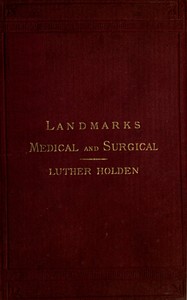
Landmarks Medical and Surgical by Luther Holden and James Shuter
First published in the mid-1800s, Landmarks Medical and Surgical is a foundational textbook by surgeons Luther Holden and James Shuter. But calling it just a textbook sells it short. It was a vital piece of kit, the Google Maps of the human body for a practicing surgeon of the era.
The Story
There's no traditional plot with characters. Instead, the 'story' is the method. The book systematically guides a surgeon through the human body, using external, tangible clues—the 'landmarks.' It explains how to find the subclavian artery by feeling for the clavicle, or how to avoid the facial nerve when operating near the ear. Each chapter is a journey into a different region, with clear, precise instructions for navigating its anatomical dangers. The drama is inherent: one wrong move based on a misread landmark could mean a severed artery or permanent paralysis for the patient.
Why You Should Read It
Reading this isn't about memorizing anatomy. It's about feeling the weight of historical responsibility. You get a profound respect for the skill and courage of these early surgeons. Their work was a brutal, direct art form. The prose is straightforward and confident, which makes it even more powerful. You're not reading theory; you're reading a master craftsman's notes passed to an apprentice. It connects you to a time when medical knowledge was hard-won, tactile, and immediately consequential. It makes you incredibly grateful for modern scans and monitors!
Final Verdict
This is a must-read for anyone fascinated by medical history, Victorian science, or just incredible true stories of human ingenuity. It's perfect for history buffs who want to go beyond dates and battles, for aspiring doctors curious about their profession's roots, and for general readers who love a book that shows how people solved massive, real-world problems with the tools they had. It's a sobering, brilliant, and utterly unique glimpse into the past.
Barbara Walker
11 months agoI had low expectations initially, however the arguments are well-supported by credible references. I will read more from this author.
Patricia Thompson
1 year agoWithout a doubt, the pacing is just right, keeping you engaged. This story will stay with me.







Carol Brown
1 year agoAfter hearing about this author multiple times, the author's voice is distinct and makes complex topics easy to digest. Exactly what I needed.