
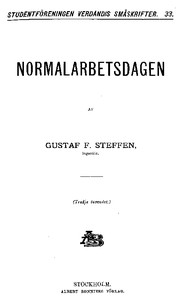
Normalarbetsdagen by Gustaf Fredrik Steffen
Gustaf Fredrik Steffen's Normalarbetsdagen (The Normal Working Day) isn't a novel with characters and a plot twist. Instead, it's a focused, passionate investigation into one of the most fundamental questions of the late 1800s: how much work is too much? Steffen, a sociologist and economist, wrote this as the industrial age was reshaping Sweden. He looked at factories, workshops, and fields, gathering data on hours, wages, and the physical toll on workers.
The Story
There's no traditional narrative here. The 'story' is the argument Steffen builds. He lays out the brutal reality of the workday for the average laborer, which was often 10, 12, or even more hours long, six days a week. He contrasts this with emerging research on fatigue, health, and productivity. His core point is simple but radical for its time: excessively long hours are not just cruel, they're counterproductive. A shorter, more regulated 'normal' workday would lead to healthier workers, fewer accidents, and better quality output. The book is his evidence-packed case for change.
Why You Should Read It
Reading this today is a strange and powerful experience. On one hand, it feels like ancient history—thank goodness we've moved past those conditions! But on the other, it's eerily familiar. The debates about burnout, work-life balance, and the value of labor echo loudly. Steffen writes with a clear moral urgency. You can feel his frustration with a system that treats human stamina as infinite. It makes you appreciate the hard-won rights of the 8-hour day. More than that, it frames work not just as an economic transaction, but as a central part of human dignity.
Final Verdict
This book is a hidden gem for anyone interested in social history, labor movements, or the roots of our modern work culture. It's not a light read, but it's a short and impactful one. You'll need a bit of patience for the period writing style, but the core ideas are crystal clear. Perfect for history buffs, economics students, or anyone who's ever grumbled about a long Monday and wondered, 'How did we get here?' Steffen gives you a crucial piece of the answer.
Michelle Hill
1 year agoFrom the very first page, the clarity of the writing makes this accessible. This story will stay with me.
George Miller
10 months agoVery helpful, thanks.





Linda Wright
6 months agoText is crisp, making it easy to focus.