
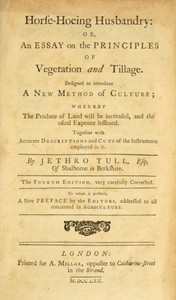
Horse-hoeing husbandry : or, an essay on the principles of vegetation and…
Okay, let's be clear from the start: this is not a page-turning thriller. Published in 1733, 'Horse-hoeing Husbandry' is Jethro Tull's life's work, written as a detailed instruction manual and a furious rebuttal to his critics. But within those old-fashioned pages is a genuine drama.
The Story
The 'plot' is simple. Jethro Tull, a lawyer-turned-farmer plagued by poor health, got fed up. He saw farmers scattering seeds wildly by hand, a method called broadcasting. It was wasteful, let weeds thrive, and yielded poor crops. Convinced there was a better way, he invented a horse-drawn drill that planted seeds in neat, straight rows. This allowed farmers to use hoes (pulled by horses) to weed between the rows without damaging the crops. His methods promised to save seed and boost harvests dramatically. The problem? Nobody believed him. The farming community, steeped in tradition, rejected his ideas as nonsense. This book is his evidence-filled, sometimes sarcastic, plea for common sense. He walks you through every step, every experiment, and every argument he had to win.
Why You Should Read It
You should read it to meet Jethro Tull. His personality bleeds through every page. He's exasperated, proud, meticulous, and utterly convinced of his own rightness. It's fascinating to watch a scientific mind—before 'science' was even a common concept—at work through pure observation and stubborn trial-and-error. Reading his explanations feels like having a very passionate, slightly cranky tutor. You get a front-row seat to a moment that changed the world. His ideas helped pave the way for the Agricultural Revolution, which in turn allowed populations to grow and cities to expand. It's foundational stuff, but it's told with the energy of a manifesto.
Final Verdict
This book is a niche read, but a rewarding one. It's perfect for history buffs who want to go beyond kings and battles to see how everyday life actually changed. It's great for gardeners or hobby farmers who will appreciate the 'why' behind modern practices. Most of all, it's for anyone who loves a story about an innovator who was decades ahead of his time. The prose is dense and the details are plentiful, so it's not a light skim. But if you want to understand where modern farming began, and enjoy the voice of a true original, dig in. Just maybe don't try to read it all in one sitting.
Susan Taylor
1 year agoUsed this for my thesis, incredibly useful.
Elizabeth Gonzalez
1 year agoI started reading out of curiosity and the storytelling feels authentic and emotionally grounded. One of the best books I've read this year.
Kimberly Lee
2 months agoEnjoyed every page.