
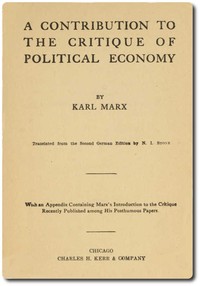
A Contribution to the Critique of Political Economy by Karl Marx
Let's be clear: this isn't a novel with a plot. The 'story' here is an argument, a journey of ideas. Marx sets out to understand the engine of capitalist society. He starts with a basic observation: in our world, most things are commodities—items produced not for personal use, but to be sold. He then meticulously traces how this simple fact shapes everything else.
The Story
The book builds its case step-by-step. First, Marx breaks down what a commodity really is (both a useful thing and a carrier of exchange value). Then, he explores how money evolves from being a simple tool for trade into a powerful force of its own. The core of his argument connects our economic system—how we produce and exchange goods—directly to our social and political structures. He famously writes that it's not our consciousness that determines our social life, but our social life that determines our consciousness. In other words, the way we organize our economy fundamentally shapes our laws, our politics, and even our ideas.
Why You Should Read It
You should read this not to agree with every conclusion, but to engage with a foundational way of thinking. Marx forces you to look beneath the surface of daily life. That phone in your hand, the coffee you bought—he asks you to consider the whole world of labor and social relations it represents. It’s a brain workout that changes how you see the news, politics, and your own job. The writing is dense, but the central questions are incredibly alive today: What gives money its value? Why do economic crises happen? How does technology change society?
Final Verdict
This book is perfect for curious readers who enjoy big ideas and aren't afraid of a mental challenge. It's for anyone who has ever felt that the economy is something that happens to them and wanted to understand the rules of the game. You don't need to be an economist, but you do need patience. Pair it with a good cup of coffee and take it slow. It's less of a cover-to-cover read and more of a fascinating, sometimes frustrating, conversation with a brilliant and relentless thinker.
Barbara Miller
1 year agoAfter finishing this book, the narrative structure is incredibly compelling. This story will stay with me.
Michelle Wilson
11 months agoI came across this while browsing and the pacing is just right, keeping you engaged. Exceeded all my expectations.
Margaret Robinson
1 year agoI was skeptical at first, but the atmosphere created is totally immersive. I will read more from this author.
Amanda Lee
1 month agoEssential reading for students of this field.







Kimberly Miller
5 months agoI was skeptical at first, but it manages to explain difficult concepts in plain English. Absolutely essential reading.